
Paris Fashion Week is one of the “Big Four” fashion weeks, alongside New York, Milan, and London. Its history can be traced back to 1945, when the Chambre Syndicale de la Haute Couture (“Trade Association of Haute Couture”, the forerunner of the Fédération de la Haute Couture et de la Mode) updated its rules for haute couture houses. According to the new rules, each house had to present a collection to the Paris press each season, and the presentation had to meet certain criteria.
These early presentations are regarded as the precursors to the modern Paris Fashion Week. The first recognized Paris Fashion Week, however, was held in October 1973 as a fundraiser for the restoration of the Palace of Versailles. The event featured showings of haute couture, ready-to-wear women’s fashion, and menswear.
Traditionally, menswear was showcased through trade shows, while fashion shows were reserved for womenswear. However, as the fashion world recognized the growing commercial importance and artistic significance of menswear, Paris Men’s Fashion Week was separated from Paris Fashion Week and became a standalone event. This reflected the fact that menswear has its own market, design culture, and seasonal rhythm.
Like most fashion weeks, Paris Men’s Fashion Week is held biannually: in mid-to-late January for fall/winter collections and in late June for spring/summer collections. The Paris shows mark the culmination of the European menswear season, following the shows in London and Milan. These fashion weeks allow designers from around the world to present new menswear collections to buyers, stylists, and the press.
Unlike other fashion capitals, which may focus on practicality and immediate market appeal, Paris men’s fashion shows frequently provide designers with an opportunity to explore boundary-pushing concepts and innovations. This approach has established Paris Men’s Fashion Week as an intellectual hub for menswear, as opposed to Milan Men’s Fashion Week, which is more commercially focused.
Events during Paris Men’s Fashion Week are held in multiple venues across the city. Some of the most iconic include the Palais de Tokyo, the Grand Palais Éphémère (until its demolition), the Musée d'Art Moderne de Paris (Museum of Modern Art), and the Beaux-Arts de Paris. Alongside these historic buildings, organizers often use unconventional venues to offer a contrasting backdrop for luxury fashion, such as indoor sports arenas and industrial warehouses. Some major fashion houses, such as Dior, Hermès, and Louis Vuitton, showcase their new collections at their headquarters.
Paris Men’s Fashion Week typically begins with showcases of emerging designers and contemporary brands. This is followed by presentations from established independent designers and mid-sized fashion houses. Major fashion houses typically close the week to maximize attendance. In addition to runway presentations, the program includes business networking events such as showroom appointments and investment showcases. While most events are closed to the public, the general public can participate in related events, such as pop-ups and exhibitions, as well as also watch show livestreams online.
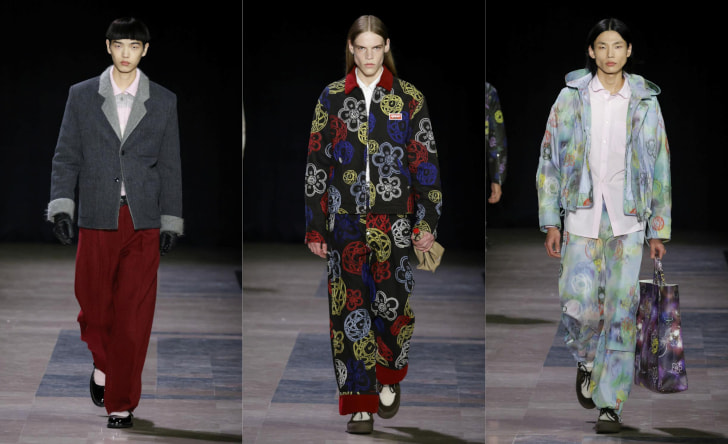
Photo: fhcm.paris


