Feast of the Black Nazarene in the Philippines Date in the current year: January 9, 2026
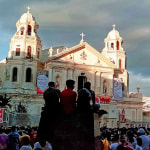 The Feast of the Black Nazarene, also known as the Feast of Jesús Nazareno, is an annual religious festival held in the Philippines on January 9. The festival honors an image of Jesus Christ enshrined in Quiapo Church in Manila.
Popularly known as the Black Nazarene, Jesús Nazareno is a life-sized statue of Jesus Christ dressed in maroon vestments and carrying the True Cross en route to his crucifixion. The statue is notable for its dark complexion, which is unusual for a depiction of Jesus. It was carved by an unknown Mexican sculptor and brought to the Philippines around 1606.
The Black Nazarene is enshrined at the Minor Basilica and National Shrine of Jesus Nazareno, also known as the Quiapo Church, in Manila. The original image has not survived intact. There are two main replicas containing fragments of the original: one with the original head and right foot on a replica body and the other with a replica head on the original body.
Originally dedicated to the Most Holy Name of Jesus, the church traditionally brings out the image of the Black Nazarene in a festive procession on the octave day of the Feast of the Holy Name of Jesus, January 9. Although the Feast of the Holy Name of Jesus was removed from the liturgical calendar in 1969, the tradition of holding a festive procession on January 9 persisted. Finally, beginning in 2025, the Feast of Jesús Nazareno was formally added to the national liturgical calendar of the Philippines.
The main event of the Feast of the Black Nazarene is a massive procession called the Traslación (“transfer”). Since the procession is central to the celebration, the feast itself is often referred to as the Traslación. Many believe the procession commemorates the Black Nazarene’s transfer from the Church of San Nicolás de Tolentino in Intramuros to the Quiapo Church on January 9, 1787. However, there is no historical evidence supporting this date.
The statue is typically removed from the church a few days before the procession, either secretly or publicly. A solemn midnight mass led by the Archbishop of Manila or a high-ranking prelate at the Quirino Grandstand in Rizal Park precedes the procession. After Mass, church officials bless the image and the crowd. Then, the image of the Black Nazarene is carefully placed on a special carriage called an andas.
During the procession, specially designated devotees pull the andas; no draft animals or vehicles are used. The andas moves through the crowded streets of Manila, where millions of devotees recite prayers and throw pieces of cloth toward the image. The cloth is wiped on the statue and thrown back as sacraments, according to the folk belief that cloth can absorb the powers of a holy object. The procession moves slowly, taking many hours to complete and often arriving at the Quiapo Church late at night or early the next morning.
The Feast of the Black Nazarene is a special non-working holiday in Manila. Similar processions are held in other parts of the Philippines, as well as by Filipinos overseas. The largest procession outside of Manila takes place in Cagayan de Oro. The city has an official replica of the Black Nazarene that was donated to the Archdiocese of Cagayan de Oro by the Quiapo Church.
- Category
- Religious Holidays
- Country
- Philippines
- Tags
- Feast of the Black Nazarene in the Philippines, holidays in the Philippines, religious holidays, Traslación, Jesús Nazareno