
The Japanese camellia (Camellia japonica), also known as the common camellia, is native to Japan and China, where it has been cultivated since the Song dynasty (10th–13th centuries). It was introduced to Britain in the early 18th century and had spread to Italy by the end of the century. Camellias quickly became fashionable ornamental plants, especially in Tuscany.
Their popularity peaked in Italy in the mid-19th century, during a period sometimes referred to as “camellia mania”. During this time, collectors created and imported numerous cultivars with enhanced flowers and foliage, which they planted in the gardens of aristocratic villas surrounding the city of Lucca.
Sant’Andrea di Compito, a village located approximately six miles from Lucca, became particularly known for its camellias due to its semi-humid microclimate and fertile soils. In 1989, Antiche Camelie della Lucchesia was launched to preserve and showcase the village’s botanical heritage, as well as to boost the region’s tourism potential.
Since the mid-2000s, the main venue of Antiche Camelie della Lucchesia has been the Camellietum Compitese botanical garden, which was established to preserve rare camellia cultivars. Events are also held at historic villas with camellia gardens in Sant’Andrea di Compito and the neighboring village of Pieve di Compito. The Antiche Camelie della Lucchesia festival features over 100 events and 200 guided tours per edition, attracting around 10,000 visitors from Italy and abroad.
The program includes guided tours of the Camellietum Compitese and the historic gardens of Sant’Andrea di Compito and Pieve di Compito, art exhibitions and contests, concerts and performances, historical reenactments, lectures, workshops, special events, educational activities for children, and tastings of local products, including olive oil and wine.
A special section of the program is dedicated to tea-related events, such as tea ceremonies and tastings, as ornamental camellias belong to the same family as the tea plant (Camellia sinensis). In addition to the camellia botanical garden, Sant’Andrea di Compito is home to Italy’s first tea plantation, located within the Antica Chiusa Borrini botanical garden. Although tea cultivation is not Antica Chiusa Borrini’s main focus, the garden produces a small amount of quality tea each year.
Originally, Antiche Camelie della Lucchesia was held once a year over four weekends in March. In the mid-2010s, the fall edition of the event was launched as an extension of the main exhibition. It focuses on autumn-blooming camellia species, such as the sasanqua camellia. The fall edition is usually held in October, also over multiple weekends. It is smaller than the spring one, but has a similar program mirroring the main exhibition.
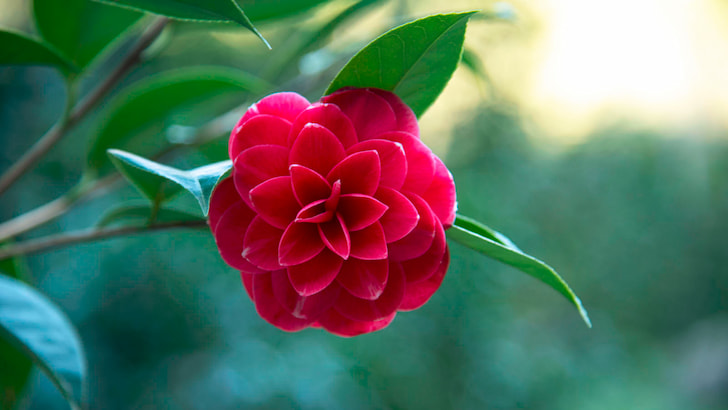
Photo: camelielucchesia.it


