Paraguayan Polka Day Date in the current year: September 15, 2026
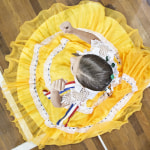 Paraguayan Polka Day (El Día de la Polca Paraguaya) is celebrated annually on September 15. Established by the Congress of Paraguay in 2011, the holiday honors a Paraguayan style of music and dance that, despite its name, is very different from the European polka.
The European polka is a style of dance and genre of music written in a half-time (2/4) meter that originated in Bohemia (present-day Czech Republic) in the early to mid-19th century. By 1845, it had reached dance halls in Buenos Aires and Asunción. However, the Paraguayan polka did not develop from the European polka; it simply borrowed the name of a popular new dance.
It is generally believed that the Paraguayan polka developed primarily from traditional Spanish dances during the colonization of South America. The exact scope of other European, as well as Indigenous influences on the development of the genre and dance has been debated by scholars. The first written mention of the Paraguayan polka can be found in the November 27, 1858 issue of the newspaper El Seminario.
Unlike the European polka, the Paraguayan polka is written in 6/8 time and is usually polyrhythmic: there are two beats in the melody (double meter), and three in the accompaniment (triple meter). The juxtaposition of the double and triple meter creates the peculiar sound that the Paraguayan polka is known for.
The Paraguayan polka is most commonly performed with the guitar and the Paraguayan harp, the country’s national instrument. However, many bands also incorporate wind and percussion instruments, including the clarinet, trombone, trumpet, drum, cymbals, and snare drum. A subgenre of the Paraguayan polka, the electronic polka, uses electronic instruments such as synthesizers and electronic keyboards. Another modern subgenre of the Paraguayan polka is polka fusion, which incorporates influences from jazz, milonga, rock, and other genres.
Some of the most notable Paraguayan polka authors and composers include Emigdio Ayala Báez, Agustín Barboza, Agustín Pío Barrios, Emilio Bobadilla Cáceres, Mauricio Cardozo Ocampo, Oscar Cardozo Ocampo, Hilarión Correa, Emiliano R. Fernández, Félix Fernández, Maneco Galeano, Florentín Giménez, Herminio Giménez, Eladio Martínez, Juan Carlos Moreno González, Carlos Noguera, Neneco Norton, and others. The most iconic performers include Juan Cancio Barreto, Luz María Bobadilla, Luis Bordón, Betty Figueredo, Cayo Sila Godoy, Grupo Generación, Grupo Ñamandu, Félix Pérez Cardozo, Berta Rojas, Francisco Russo, Grupo Tekové, Los 3 Sudamericanos, Alberto de Luque, and more.
In 2011, the Congress of Paraguay established Paraguayan Polka Day. September 15 was chosen as the holiday’s date to commemorate the death anniversaries of two renowned Paraguayan musicians who popularized the dance, Emiliano R. Fernández and Luis Alberto del Paraná, who passed on the same day 25 years apart. The main goals of the holiday are to honor iconic musicians, popularize the Paraguayan polka, keep the tradition alive, strengthen social cohesion, and promote artistic education and cultural tourism.
- Category
- Cultural Observances
- Country
- Paraguay
- Tags
- Paraguayan Polka Day, cultural observances, holidays in Paraguay, Paraguayan polka, Paraguayan culture