Beginning of the Christmas Season in the Philippines Date in the current year: September 1, 2026
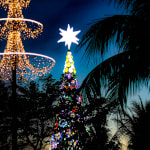 The Philippines has the longest holiday season in the world: September 1 marks the start of the Christmas season in the country. Although it is not a public holiday, it is widely celebrated culturally.
The Philippines is one of two predominantly Catholic countries in Asia; the other is East Timor (Timor-Leste). According to one account, Franciscan friar and missionary Odoric of Pordenone celebrated the first Christmas Mass in the Philippines in present-day Bolinao, Pangasinan, on December 25, 1324, after a storm blew him off course.
While there is no concrete evidence to support this account (the generally accepted date of the first Mass in the Philippines is March 31, 1521), there is no doubt that Christmas celebrations have a long history in the Philippines, as the first documented celebration occurred in 1565 shortly after Miguel López de Legazpi established the first permanent Spanish settlement at Fort San Pedro in Cebu.
Over time, Christmas celebrations in the Philippines have evolved into what is now known as the Philippine Christmas season. While the holiday season in most other countries usually kicks off in late November or early December, in the Philippines, you can see the first Christmas decorations and hear Christmas music as early as August. The Christmas season officially begins on September 1 and spans the so-called “ber months”, i.e., months whose names end in “-ber”: September, October, November, and December.
September typically sets the mood for the holiday season. Stores and houses are decorated with Christmas lights, holiday music makes a comeback on the radio and in public spaces like shopping malls, and people start buying decorations and budgeting for gift shopping and other holiday-related expenses.
Parols are a traditional Christmas decoration in the Philippines. These traditional Christmas lanterns are made from bamboo and Japanese paper and are usually shaped like a five-pointed star. However, modern parols come in different shapes and can be made from various materials. During the Christmas season, parols can be seen on houses, streets, churches, and commercial buildings.
Nativity scenes, called belens, have also been a major feature of Christmas celebrations in the Philippines since the Spanish colonial period. More recently, due to secularization and globalization, other decorations and symbols, such as Christmas trees, Santa Claus, reindeer, snowmen, and tinsel, have become commonplace.
Christmas shopping in the Philippines begins in October, and by November, shopping and other preparations are in full swing. The main religious and family celebrations occur in mid-December. December 16 marks the start of Simbang Gabi, a series of nine dawn Masses leading up to Christmas.
The Philippine Christmas season is special because the Philippines is a tropical country, so there is no cold weather or snow to mark the transition to the holiday season. The “ber months” have therefore become a cultural signal of the approaching Christmas season, in the absence of the weather changes typically associated with Christmas in many other parts of the world.
- Category
- Cultural Observances
- Country
- Philippines
- Tags
- Christmas season in the Philippines, Christmas in the Philippines, holidays in the Philippines, ber months, Christmas celebrations