How to Light Up Any Celebration: A Room-by-Room Guide to Choosing Stage Lights for Events
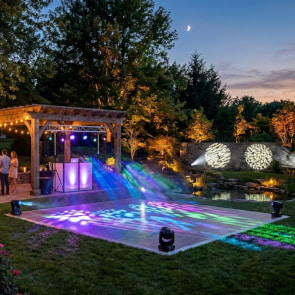 Ever tried turning a backyard into a dance floor with nothing but a string of fairy lights? You’re not alone. The world’s appetite for event lighting is exploding, and even casual hosts are discovering that a few well‑placed fixtures can transform a humdrum gathering into something people talk about for weeks.
In the U.S., stage lighting is racing from $729.5 million in 2024 toward a projected $1.66 billion (rounded from $1,657.63 million) by 2032, according to Credence Research.
Globally, the event lighting equipment market hit $5.2 billion in 2025 and is on track for $8.1 billion by 2034, a MarketIntelo report shows. Yet for many non‑pros, the spec sheets and trade jargon can feel like a foreign language.
Here’s the good news: you don’t need a degree in stagecraft. Think of each celebration space—backyard, dance floor, banquet hall, stage—as its own “room” with distinct lighting needs. Just as small tweaks transform a room, the right light reshapes the mood. Let’s walk through it, room by room.
Methodology: How We Mapped Light Types to Celebrations
We built this guide for the friend with a credit card and a weekend deadline—not a professional lighting tech. Every recommendation was evaluated against five practical criteria:
-
Ease of setup – plug‑and‑play vs. DMX complexity.
-
Budget tiers – real‑world entry, mid, and aspirational price points.
-
Visual impact – coverage (wash), punch (beam), projection (spot).
-
Indoor/outdoor fit – IP rating, wattage, ambient‑light resilience.
-
Versatility – how many jobs one fixture can do.
We zeroed in on four events non‑pros actually host: casual outdoor parties, DJ‑driven dance nights, elegant weddings, and intimate concerts. For each, we matched the lighting type that delivers the most magic with the least headache.
Stage Light Types: A Cheat Sheet for the Uninitiated
Before you shop, let’s decode the main players you’ll meet.
Wash lights are the mood‑setters. They flood a wide beam—anywhere from 20° to 120°—of solid colour across a wall, floor, or stage, bathing the space in rich ambience. Litelees describes them as a visual foundation of any rig, ideal for weddings, parties, and concerts where colour washes create the vibe.
Beam lights go the opposite way. They produce an ultra‑narrow shaft, often just 1°–3°, designed to cut through haze and create dramatic aerial columns. As Beyond Stage Lighting notes, they’re the go‑to for nightclubs and EDM events—lights that make you feel the music in the air.
Spot / moving head lights give you a sharp, defined cone. They project gobos (patterned stencils) to splash logos, textures, or precise highlights on performers and walls. Electromarket points out that spot fixtures are the workhorse for stage productions and anything that needs a focused accent.
Then there’s the moving head category—a fixture that can optically morph between wash, spot, or beam depending on its internal lensing. They’re the most versatile but also the most mechanically complex, as Litelees explains.
Behind all this sits the quiet LED revolution. By 2026, MarketIntelo reports that 58% of legacy rigs have been replaced by LED systems, which boast 50,000-plus hour lifespans and cut running costs by 65–72% compared to old halogen or HID lamps.
Finally, control basics. The professional backbone is DMX512, which supports up to 512 channels per universe and can command everything from colour to strobe speed. If that sounds intimidating, don’t worry—many lights offer sound‑active plug‑and‑play modes that react to music without a controller.
Scenario 1: Backyard Party – Wash & Waterproof
Backyard parties are all about easy warmth. Birthdays, BBQs, or lazy garden soirées want lush colour without blinding the neighbours. Your best friend here: affordable RGBW PAR wash lights perched on tripods, maybe with a compact wash moving head if you want a little motion.
Waterproofing isn’t negotiable once the night air turns damp or a surprise shower rolls in. Colour choice matters too. Grant Sound notes that warm tones energize a space, while cool blues create a chill lounge feel. Use colour‑change modes to shift from a sunny afternoon glow to a deep‑blue evening mood without ever touching a DMX console.
Scenario 2: DJ Night or Dance Floor – Beam, Strobe & Motion
When the bass drops, the lights should do the talking. Mobile DJ gigs, basement raves, or makeshift club nights demand a mix of wash, PAR, and beam/effect lights—the visual foundation any concert or DJ stage relies on.
Here’s a realistic budget ladder that won’t leave you eating ramen for a month:
-
Under $700 – 2 PAR lights + a basic strobe, enough for small house parties with some punch.
-
Around $297.14 (sale price) or $358.00 (regular price) as of current pricing – add a laser bar and a basic DMX controller to start syncing motion and accents.
-
Around $546.97 – add a 300W wash/spot/beam moving head for pro‑level visual excitement that fills a room.
SHEHDS lighting slots beautifully into this picture. The brand’s moving heads offer beam angles as tight as 0.2° (from the 17R 350W beam) and zoom‑happy models that span 4°–45°, with prices ranging from roughly $90 to over $900. The 19×15W RGBW wash/zoom has become a community favourite.
Over 180 Trustpilot reviews echo the sentiment, highlighting solid build quality and fast shipping. For DJs and party hosts who want club‑worthy beams without remortgaging, it’s a sweet spot.
Scenario 3: Weddings – Elegant Wash & Soft Spotlighting
Weddings live and die on ambience. Romance, intimacy, and that first‑dance drama all hang on the glow of the room. It’s no surprise that premium wedding lighting budgets are growing. The approach doesn’t need to cost a fortune.
A warm amber wash over dinner, gobo‑projected monograms or floral patterns on the dance floor, and pin‑spotting on centrepieces can create the same lush feeling. Grant Sound confirms that soft, warm lighting makes a space feel cozy and intimate—exactly what you want when Grandma takes her first sip of champagne.
A practical gear tip: low-noise LED wash moving heads (19×15W zoom models, for instance) with DMX-timed colour shifts let you flow from gold-hour warmth to starry-night cool without a single fan whir ruining the toast. DMX control might sound daunting, but even a simple scene-trigger system can handle the job beautifully.
Scenario 4: Small Concerts or Band Performances – Full Stage Rig
If you’re putting on a local band night, an open-mic, or a garage concert, you’re telling a story with light—solos, drops, and builds all need their moment. Intelligent fixtures now make up 31% of premium installations and are growing 8.7% annually, and MarketIntelo notes that 45–65% of a concert lighting rig is now intelligent kit.
A versatile small-concert rig follows a proven formula. Betopper recommends PARs for ambient washes, spot moving heads to highlight performers, beam fixtures for aerial climaxes, and strobes for punctuation. A DMX controller or PC software lets you program scenes for each song; sound-active mode serves as a reliable backup when things get chaotic.
And the budget? You can build a capable rig with 4 PARs, 2 spot moving heads, and a hazer for well under $2,000 if you stick with value brands. It won’t rival a stadium tour, but it’ll make a local show feel huge.
Caveats & Counterpoints: What You Should Know Before Clicking ‘Buy’
Value lights are tempting, and for good reason—but they’re not “road-ready” in the pro sense. Real-world tests reveal some rough edges. Fans can be distractingly loud, cycling on and off during quiet moments.
Dimming below roughly 30% often gets steppy and unreliable, as lighting designers on Reddit have flagged, along with occasional firmware quirks like jitter at slow pan/tilt speeds.
Warranty support may also exist mostly on paper. Return shipping to overseas manufacturers can cost as much as the fixture itself, so factor that into your gamble.
None of this means you should avoid budget lights—just match expectations to the gig. For a permanent church install, a monthly house party, or a mobile DJ rig that stays in a padded case, they’re fantastic. For theatre-grade colour reproduction and dead-silent operation, the pro lines still justify their price.
To put it in perspective, AV Productions points out that a professionally lit event for 200–300 people typically runs $2,500–$3,000. Saving hundreds on gear might cost you in refinement and lifespan.
Your Celebration, Lit Right
So here’s the game plan: look at your space, pick the light type that fits the “room,” and scale the budget to match. Even two wash lights on tripods can transform a backyard from forgettable to Instagram-worthy. As you grow, dip into beam and moving-head territory for that club-night drama.
Before you click buy, check the IP rating—outdoors demands IP65 or higher—and try to buy from brands that keep local warehouses so returns don’t become an international saga.
Start small, experiment with sound-active modes, and let the room tell you what it needs. You’ll be amazed how fast you go from clueless host to maestro of mood.
Breadcrumbs
Tags