A Complete Guide to Traditional Metal Braces
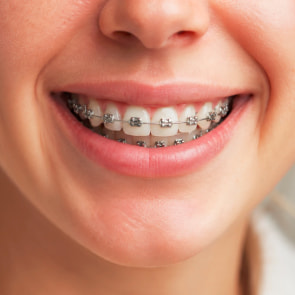 For all the buzz around clear aligners, the most reliable way to straighten teeth is still the one that has been around for decades. Traditional metal braces fix problems that newer options struggle with, cost less than most alternatives, and work on nearly any case an orthodontist meets.
They have a dated reputation and an outdated look in most people's memory, yet the technology behind them keeps improving quietly. This guide walks through what they are, how they move teeth, what treatment feels like day to day, and how to weigh them against the clear options everyone is talking about.
If you or your child are heading into orthodontic treatment, understanding how these braces actually function takes most of the mystery, and a fair bit of the worry, out of the process.
What Traditional Metal Braces Are
Metal braces are a fixed system of small brackets bonded to the front of each tooth, connected by a thin metal archwire. The bracket acts as a handle, the wire supplies steady pressure, and small elastic ties or clips hold the wire in its slot. Because the whole system stays put, it works around the clock without depending on anyone remembering to wear it. Modern brackets are noticeably smaller and flatter than the bulky hardware of past generations, which makes them more comfortable and less conspicuous than the "metal mouth" many adults still picture. The core design has barely changed because it works, but the materials and precision behind it have moved forward steadily.
How They Move Teeth
The science is simpler than it looks. Each tooth sits in bone, held by fibers and surrounded by living tissue that constantly remodels itself. When the archwire applies gentle, continuous pressure, the bone on one side of the tooth breaks down while new bone forms on the other, letting the tooth migrate slowly into place. Orthodontists direct this movement by shaping the wire and changing it over time, often adding elastics to correct how the upper and lower teeth meet. The pressure has to stay light and steady, which is why teeth move over months instead of weeks. Rushing the process would damage the roots and the bone, so patience is built into the treatment by design.
What Braces Can Fix
Their biggest advantage is range. Fixed braces handle the full spectrum of orthodontic problems, including the severe cases where aligners fall short:
- Crowded teeth with too little room in the arch
- Wide gaps and spacing between teeth
- Overbite, underbite, and crossbite
- Rotated or badly tilted teeth
- Teeth that erupted out of position
- Complex bite corrections that need precise, controlled movement
This versatility is the main reason orthodontists still reach for braces so often. When a case is complicated, fixed brackets give the specialist the most direct control over every tooth.
The Treatment Timeline
Most people wear braces somewhere between eighteen months and three years, with the exact length driven by how much the teeth need to move. The journey follows a predictable arc from the first appointment to the retainer that protects the result.
Stage |
What happens |
Rough timing |
|---|---|---|
Consultation |
Exam, X-rays or scans, and a treatment plan |
First visit |
Placement |
Brackets bonded and the first wire fitted |
1 to 2 hours |
Adjustments |
Wires changed, elastics added, progress checked |
Every 4 to 8 weeks |
Completion |
Braces removed once teeth are aligne |
18 months to 3 years |
Retention |
Retainer worn to hold the new position |
Ongoing |
The adjustment visits are the heart of treatment. Each one nudges the plan forward, which is why keeping them matters so much to finishing on time.
Living With Braces Day to Day
The first week is the biggest adjustment. Teeth feel tender for a few days after placement and after each tightening, and over-the-counter pain relief plus soft foods carry most people through. Orthodontic wax smooths over any bracket that rubs the inside of the lip or cheek while the mouth toughens up. Cleaning takes more effort, since food catches around brackets and wires, so brushing after meals and learning to floss with a threader becomes part of the routine. A few foods have to go for the duration: anything hard, sticky, or chewy, like caramel, popcorn, and ice, can snap a bracket loose and set treatment back. None of this is difficult once it becomes habit, and most patients forget the braces are there within a month.
Metal Braces vs. Clear Aligners
The honest comparison comes down to what your case needs. Braces win on range and reliability, correcting complex bites and severe crowding that aligners cannot reach, and they usually cost less. They stay visible, demand more careful cleaning, and rule out a short list of foods. Clear aligners win on looks and convenience, since they are nearly invisible and come out for meals and brushing, but they only suit mild to moderate cases and lean entirely on the wearer keeping them in for 22 hours a day. For a disciplined adult with a minor issue, aligners are a comfortable fit. For a child, a complex bite, or anyone who would rather not manage compliance, braces remain the dependable choice.
Caring for the Result
Finishing treatment is not the end of the story. The day the braces come off, a retainer takes over the job of holding everything in place, because teeth drift back toward their old positions without something to hold the line. Wearing that retainer as directed, full-time at first and then nightly for the long haul, is what protects the months of work you just completed. Skipping it is the single most common reason people end up needing orthodontic treatment a second time. The straightening is temporary work; the retention is what makes it last.
Traditional metal braces have stayed at the center of orthodontics for a simple reason: they solve more problems, more reliably, for less money than almost anything else. They ask for a stretch of patience and a bit of extra care, and they hand back a result that holds for a lifetime when you protect it. If you are weighing your options, an orthodontist can tell you within one consultation whether your case calls for the proven power of braces or the convenience of a clear alternative.
Breadcrumbs
Tags