International Day of the World’s Indigenous Women and Girls Date in the current year: September 5, 2026
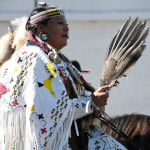 The International Day of the World’s Indigenous Women and Girls is a United Nations observance held annually on September 5. It was established to raise awareness of the important role Indigenous women play in their societies and the unique challenges they face.
The term “Indigenous women” refers to women belonging to Indigenous peoples, which are typically defined as distinct communities with historical ties to specific territories, cultures, languages, and social traditions predating the formation or growth of dominant states or populations. This term encompasses women from over 5,000 Indigenous peoples worldwide, including First Nations, Inuit, Sámi, Māori, Aboriginal and Torres Strait Islander peoples, and others. According to the United Nations, there are approximately 185 million Indigenous women worldwide, though this figure may vary depending on the source.
The role of women varies considerably among Indigenous societies, but they are often indispensable to preserving and passing down language, traditions, crafts, and cultural knowledge. Historically, women in many Indigenous societies have had specific spiritual, cultural, or political responsibilities. In some parts of the world, those responsibilities were disrupted or undermined by colonization when the arriving Europeans imposed patriarchal Christian values on Indigenous peoples.
In the modern world, Indigenous women and girls are disproportionately affected by inequality because they belong to two vulnerable groups (double discrimination): women and members of Indigenous communities. The challenges they may face include limited access to essential services and employment, higher rates of adolescent pregnancy, obstetric violence and maternal mortality, compulsory contraception, forced sterilization, disproportionate sexual victimization, and higher femicide rates.
Of course, Indigenous women in different countries face different challenges, but the issues they face are distinct enough to have given rise to Indigenous feminism. This type of intersectional feminism focuses on empowering Indigenous women and achieving their human rights within the context of Indigenous priorities and decolonization.
On November 26, 2025, the United Nations General Assembly adopted a resolution designating September 5 as the International Day of the World’s Indigenous Women and Girls. The UN did not create a new observance, but rather formalized an existing one: the International Day of Indigenous Women (Día Internacional de la Mujer Indígena), which originated in Latin America in the early 1980s.
September 5 commemorates the death anniversary of Bartolina Sisa, an Indigenous Aymara woman. She was born in what is now Bolivia, which was then part of the Viceroyalty of Peru. Sisa was married to the indigenous leader Túpac Katari and fought alongside him against Spanish colonization. When she was in her early 30s, the Spanish captured Sisa and executed her in the main square of La Paz on September 5, 1782. In Bolivia and throughout Latin America, Sisa is regarded as an icon of indigenous resistance.
- Category
- UN Observances
- Tags
- International Day of the World’s Indigenous Women and Girls, international observances, UN international days, Bartolina Sisa